

A Hungry Ghost No More
My friend Sarah was the coolest girl in the room. She was also, that same evening, a day away from rehab. On Sarah Hiscox's memoir, and what I got wrong about addiction.

In the Buddhist Wheel of Life, one of the six realms belongs to the hungry ghosts: creatures with scrawny necks, tiny mouths and vast, bloated, empty bellies. They can never eat enough. Gabor Maté borrowed them for the title of his book on addiction, In The Realm of Hungry Ghosts and it reminds me that addiction is not something anyone chooses. You either have the vast, bloated, empty belly - a perpetual, insatiable yearning to fill an emptiness you can’t quite understand - or you don’t. I don’t judge addicts; I do judge the dealers.
I am one of the lucky ones, I can look at a glass of wine, drink the glass of wine, enjoy the glass of wine, and then happily say “no” to any more. (Put a bowl of chips in front of me and it’s a different story, the “noise” is amplified until every single one of those chips has gone). But for those haunted by the hungry ghosts, you’ll reach for the wrong thing, over and over, because you haven’t yet figured out what’s causing it. In Mate’s account, the cause is trauma. And the true tragedy is that if you’re an addict, for your entire life, you’re not fully present. You’re always looking for ways to quiet that rage, pour water on that fire, fill that aching gap, and kill the trauma that started it all.
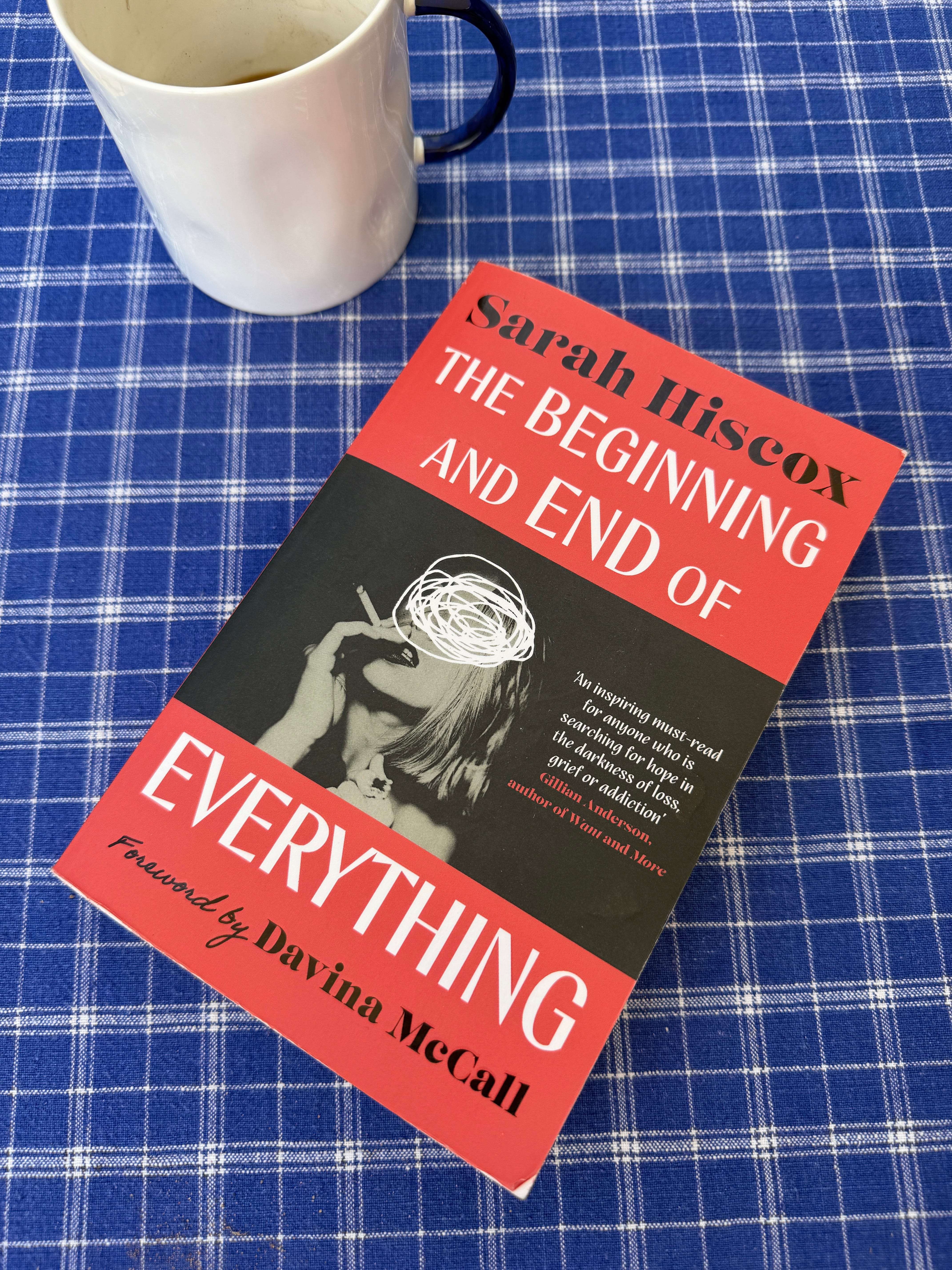
Which brings me to my friend Sarah Hiscox’s memoir, “The Beginning and End of Everything”. For five years, Sarah was absent from all the things that really mattered in her life as her addiction took hold. Five years of near-annihilation are laid out, bravely, without any kind of protective membrane - her near-deaths, her children’s rejection of her, the breakdown of her marriage. It’s a difficult, painful, uncomfortable read - gritty, unrelenting, miserable in some places, self-deprecating in others, but the fact that this all took place over 20 years ago tells you all you need to know without me giving away any plot-spoilers - there is a happy ending.
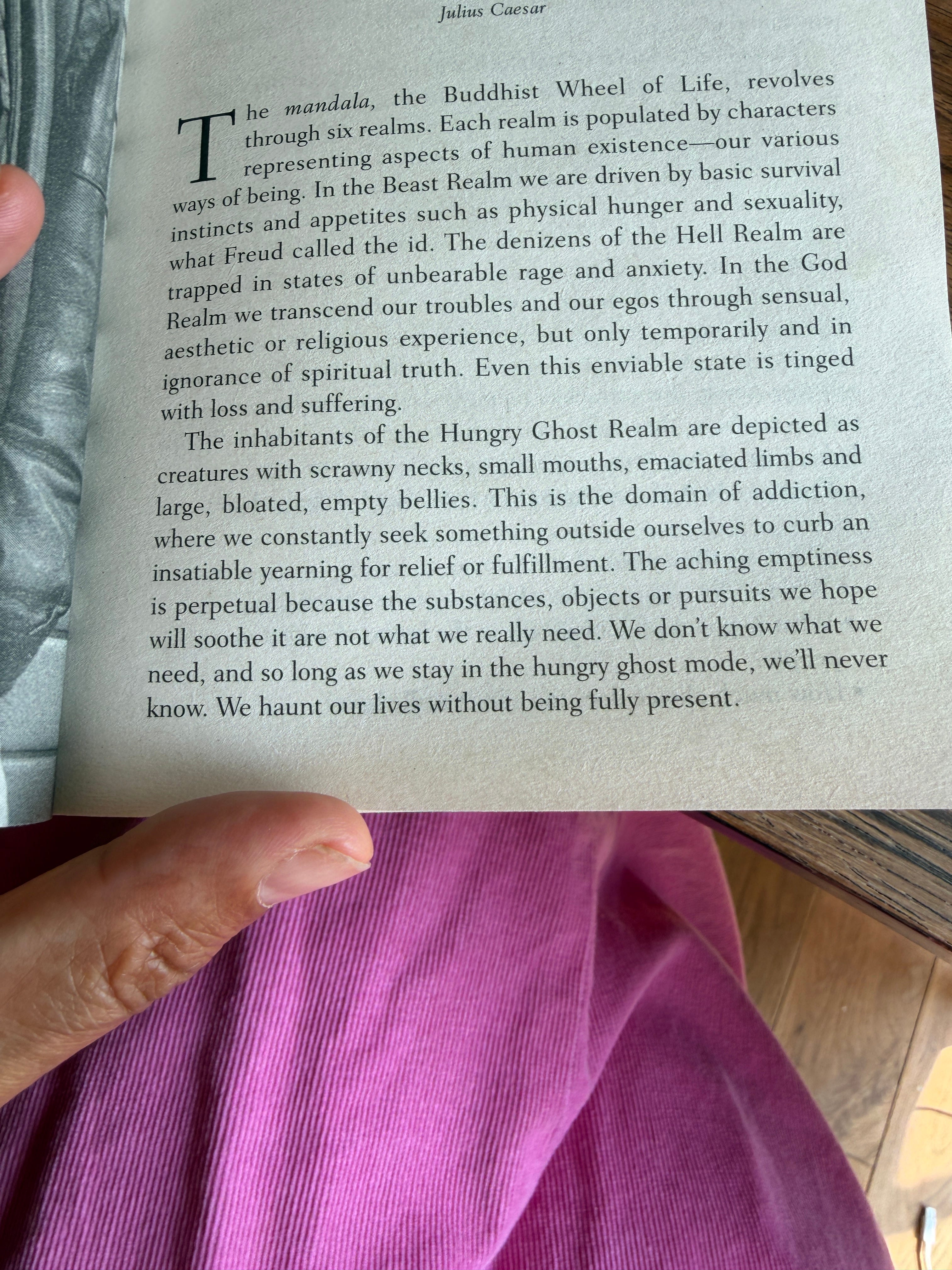
Gabor Mate’s In The Realm of Hungry Ghosts
I remember some of it vividly. Being at a dinner in Hoxton at a restaurant called The Real Greek, a day away from giving birth to my second baby. She was a day away from checking into rehab, about to see her access to her children diminish, possibly not caring that much about that because drugs were all that mattered. There was a cheery conviviality around the table, with no one really talking about the elephant in the room, and I’m puzzled now as to why that was. Loads of people in their late 20s and early 30s took drugs back then, loads of them do now. But to have such a huge problem with them that you have to be sent away from your home, your child, your husband? Why was no one talking about this? Sarah was always a rock n roll, tomboyish, sexy-cool, young mother, who ran with a glamorous, party crowd, (as did I at the time), perhaps to them, this was a part of that same rockstar trajectory.
In her memoir, Sarah talks a lot about envying all the cool girls, and wanting to be like them, but the irony is, she was that girl herself - the one who had it all. Everyone loved her. Sarah was able to put anyone and everyone at ease instantly, she was warm, incredibly funny, had a husky voice, long Anita Pallenberg hair (and a not dissimilar style), the coolest friends, the brightest blue eyes. Mostly I envied (and still do) her wardrobe which is that perfect mix of feminine-masculine. I also would have loved to be as thin as she was. (This was the 2000s). All of which hammers home that lesson: do not compare yourself to others. (Wait, isn’t that a commandment even, “thou shalt not covet?”) Sarah was thin because she had bulimia, and drinking and taking drugs to hide the absolute lack of any sense of worth within. She did not love herself. For which, reading her book now, I could cry.
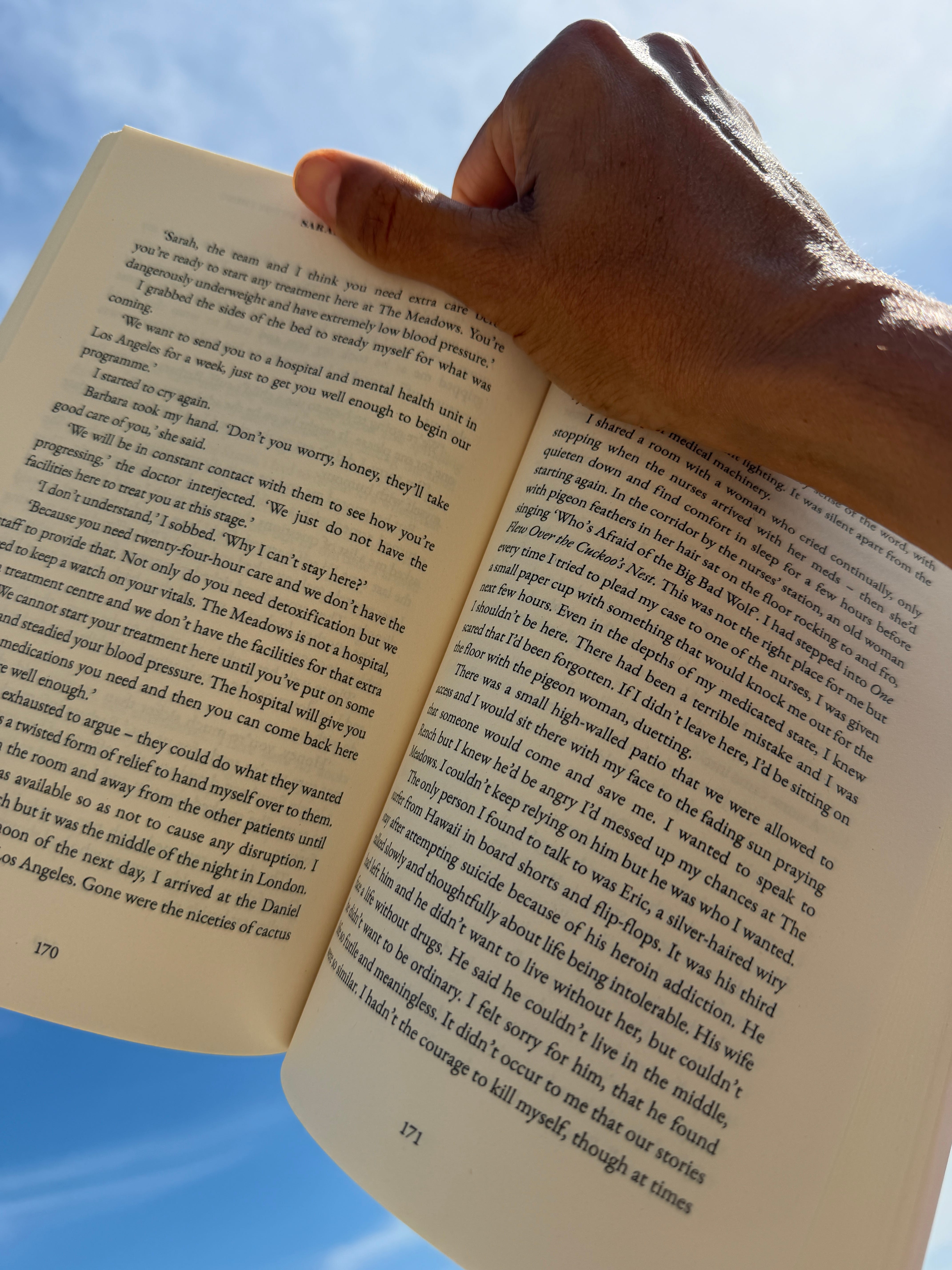
It’s a page-turner. Sarah Hiscox: The Beginning and End of Everything
Where does trauma come from? It’s agonising being a parent, because you’re going to fuck it up. That’s a given. Hopefully not as spectacularly as Sarah’s parents did. I felt sorry for her mother, who takes all the blame but ultimately was living her own hell having been left by Sarah’s narcissistic father with two, then three small children. She was a victim of the same middle-class pretensions that afflicted all parents in the 1970s, inflicting the cult of perfection on her children. If you’re reading this as a 58 year old, there will a point when you’ll think, “oh but wait, my mum told me to say “sofa” instead of “settee” too!” and the logical next question is, “So why am I not an addict?” at which point, the Hungry Ghost analogy comes in useful. We’re not addicts for the same reason Sarah’s sister isn’t despite having more or less the same childhood - we’re just not hard-wired that way - raging hunger, aching bellies, emptiness within. Is that genetic?
Much has been made in the press about Sarah’s friendship with Davina McCall, who is an incredibly supportive and loyal friend, brutal at times in turning Sarah away which was the much-needed course of action at the time, but for me, the real star is Renshaw, Sarah’s husband. Despite getting divorced, he wants nothing more than for Sarah to get better because he wants their children to have a mother who is well. He pays for her rehab countless times, and brings up the children whenever she is away. There is one particularly moving scene in her book, where Renshaw is asked to join a therapy session with Sarah in one rehab centre. The therapist asks him to read out a list of “a typical day in the life of Renshaw” and as he lists all the mundane parenting tasks from dawn to dusk, your heart aches for Sarah, who has lost it all, and has only herself to blame, something she knows only too well. Now we’re in our late 50s all of us, but I have to remind myself, Sarah and Renshaw were in their early 30s back then - they were so young to be going through all this.
This is a book that stays with you long after reading it. I hope they make a film out of it. It’s a page-turner, and for me personally, because it is written by and about someone I know, it’s a hard read. I hate thinking about what she went through, how lonely it must have been for her. The irony that at one point all her friends abandoned her, and it was only her mother - the very person who is responsible for much of Sarah’s childhood trauma - who let her stay with her at home, is not lost on the reader.
One of the happier sides to this story (and there are many, but I will leave them for you to discover in the book) is that The Beginning and End of Everything is selling well. What Sarah has achieved in baring her soul, so eloquently and movingly, by being so honest about what drugs took from her life, will help others battling their own private hells. She still has a husky laugh and sparkling blue eyes. She has a beautiful family, with kids who have inherited that same dynamic energy that she and Renshaw have as parents. She has been sober for many years.
And she is still the coolest girl in the room.
The Beginning and End of Everything by Sarah Hiscox with a Foreword by Davina McCall is published by September books. Sarah wrote this piece recently in Vogue, on where she’s at now.