

And Now For Something Really Helpful...
A new legal foundation launches in memory of Hugh Devlin, the lawyer who protected creatives — here's what it means for those starting out with more ideas than money

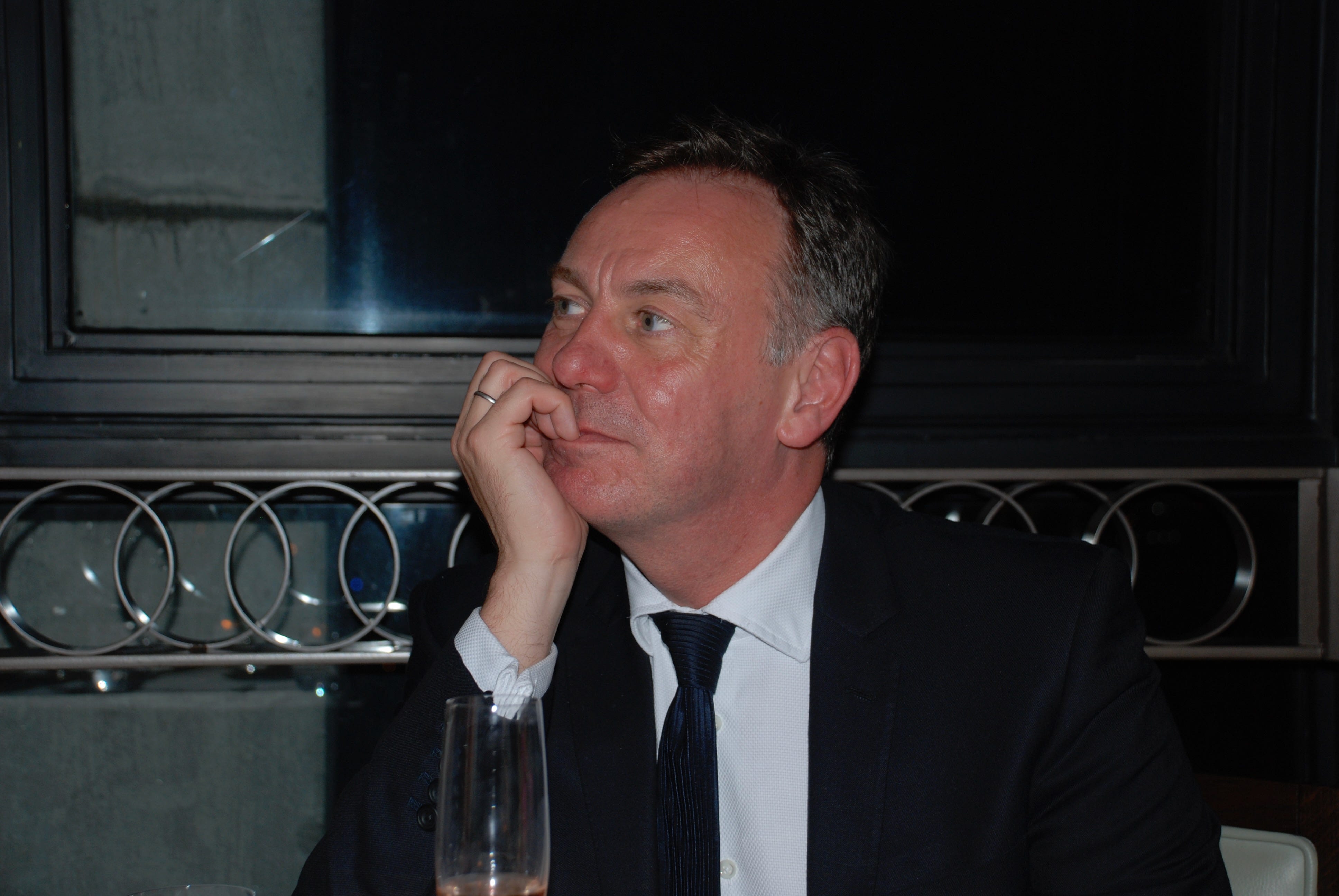
This week sees the launch of the Hugh Devlin Foundation, a new organisation set up by Hugh’s wife, Sarah Polden as well as friends and former clients, offering UK-based emerging talent something far rarer than encouragement: free, practical legal and financial help at the moments that actually decide whether a young business lives or dies. As lovely and helpful as mentoring schemes and networking circles are, this is instead a conduit to real lawyers and accountants — from firms including Withers, Mishcon de Reya, Sheridans and Wedlake Bell — who will take on a specific problem and resolve it, without charge, for an agreed period. The foundation matches applicants to the adviser best suited to their need. Its founding partners read like a roll-call of British creative life: Anya Hindmarch, Christopher and Tammy Kane, Charlotte Tilbury, the artist Jake Chapman, the hairstylist and brand founder Sam McKnight, Lucy Yeomans, and Edward Barber of Barber Osgerby. Every one of them was, at some point, helped by the man whose name it carries.
The need it addresses is more urgent than it might first appear. The creative industries contribute many millions to the UK economy and are a genuine source of national pride, yet the people inside them are routinely under-resourced and overwhelmed — confronted with unfair contracts, unpaid speculative work, sub-minimum fees, and outright theft of their intellectual property. Even if those aren’t the things that affect your new business and you escape unscathed, the cruel arithmetic of starting out is that the help you most need is precisely the help you cannot afford. There are mentors everywhere, generous with their time and their advice. What there is far less of is someone willing to roll up their sleeves and do the work: read the contract, file the trademark, structure the equity, tell you in plain language what you are about to sign away. However much you instinctively know there is a cliff-edge, you need the kind of person who walks over and pulls you back from it. Hugh Devlin (1962-2023) was very much that kind of person.
Working on a commercial basis with some of the largest companies in the country, Hugh gave his time freely — and for free — to individuals and businesses who could not afford professional advice. A partner and consultant at Withers, he had a particular gift for bridging the gap between creativity and commerce, and for translating dense legal concepts into something a designer or a perfumer could actually use. A much-repeated phrase of his was Don’t sign it — deployed not only when he had spotted unacceptable terms, but as a way of teaching people to understand their own worth, then and into the future.
“Hugh was the person you could go to, who would protect and fight for creatives,” says Anya Hindmarch. “He lived to support those who typically undervalued their contribution to creative businesses and often were not equipped to stand up against the larger organisations.” He was, she adds, “laser and razor sharp,” and “always on the end of a phone if a young designer called SOS.” Her conclusion is one many would echo: “The creative industries are less protected without his presence.”
I can vouch for all of it, because I would not have La Pyae if it weren’t for Hugh.
We first spoke when I interviewed him for the Financial Times, an introduction made by my friend Amanda Lacey, a facialist, skincare brand founder, and one of life’s great connectors, who had been keen for us to meet for months. I confess I didn’t quite get it at the time. He was a lawyer — not a chief executive, not a serial entrepreneur, not a creative. Weren’t all lawyers, I reasoned (having read Law at university, which entitles me to the prejudice — anyone who has skimmed a Land Law textbook will understand), inherently boring? It was only later, when things had moved on, that I understood. By then I had made a perfume. I had a name, a concept, a deck - lots of decks - and no money at all. What should I do about trademarks? I had people working for me whom I wanted to reward with equity — how did that work? What did he charge? Could I pay him in equity too?
“Don’t worry about that,” he said. “I know your name.” He had heard of my small, early involvement with a beauty brand he’d just steered through a large exit. And then, characteristically, he decided to help. He told me to think bigger, to get the right raise. He cited founders he’d guided years before, suggested people I should approach, wrote the introductions himself.
What I loved was that, unlike most lawyers, he had opinions, and he was funny with them. Of one man who’d dangled investment: “Waste of time.” (He was right; years later I’m still being politely fobbed off.) When I floated a woman I thought seemed nice who had just sold her brand: “Not if you want to continue working with me” — from which I understood there had been a falling-out, and said no more. I always finished our calls feeling good about them.
Our whole relationship unfolded over Zoom during Covid. He didn’t mind my small, badly behaved dog leaping onto my lap mid-call, or demanding to be let out, then in, then out again — he didn’t mind because he loved dogs, especially his own. He didn’t mind that I had no money, and that unlike the other founders he helped, I had no lucrative former career to bankroll this shiny new future. The truth nobody says aloud is that launching “from the kitchen table” only works if someone can pay for the kitchen table. And in a room of middle-aged male investors — which is almost always the room — I hate to say it, but a middle-aged woman is not what they came to find. They want young, disruptive, a gazillion followers, with a product powered by tech or AI — even a moisturiser will do, so long as they can hold their heads up high with the tech bros.
Hugh could see past all of that. He saw someone who worked hard, had good ideas, was well connected, and was determined to make it work however long it took. The most valuable thing he ever gave me had nothing to do with the legal work he never charged me for. It was a sense of my own worth — and it was that, in the end, that gave me the courage to send Catch Me If I Fall out into the world.
Sadly, he didn’t live to see it. He died suddenly. At his memorial I found a room full of faces, famous and otherwise, who had known and relied on him for far longer than I had, and I understood for the first time the scale of what he had generously, tirelessly done for so many. How he found the time for us all, I will never know.
The foundation exists for exactly this reason. If you are a UK-based creative or small business facing a moment of difficulty — a contract you don’t understand, a trademark you can’t afford to protect, a deal you’re about to sign — you can apply through the foundation’s website, and you will be matched with a lawyer or accountant suited to your situation, who will help you with that specific problem, without charge, for an agreed time.
It is genius, and absolutely what is needed for new businesses and entrepreneurs. It is, as Anya Hindmarch puts it, “absolutely fitting for the man that was Hugh Devlin.” And for those of us tied to the kitchen table for a little longer, it means we will never have to feel we are doing everything on our own. What a wonderful way for Hugh to be remembered.
Apply at www.hughdevlinfoundation.org
Further reading: Sarah Mower on the foundation’s important work in Vogue Business
10 Magazine on the foundation’s mission